Heart Surgery Scars
Quick Answer If you are considering keloid on chest removal, here is what you need to know:
-
Keloid scars can form after heart surgery, especially on the chest.
-
These scars may itch or cause discomfort.
-
Treatment options include steroid injections and silicone gel sheets.
-
Surgical removal might be needed but can lead to recurrence.
-
Consult your doctor for personalized advice.


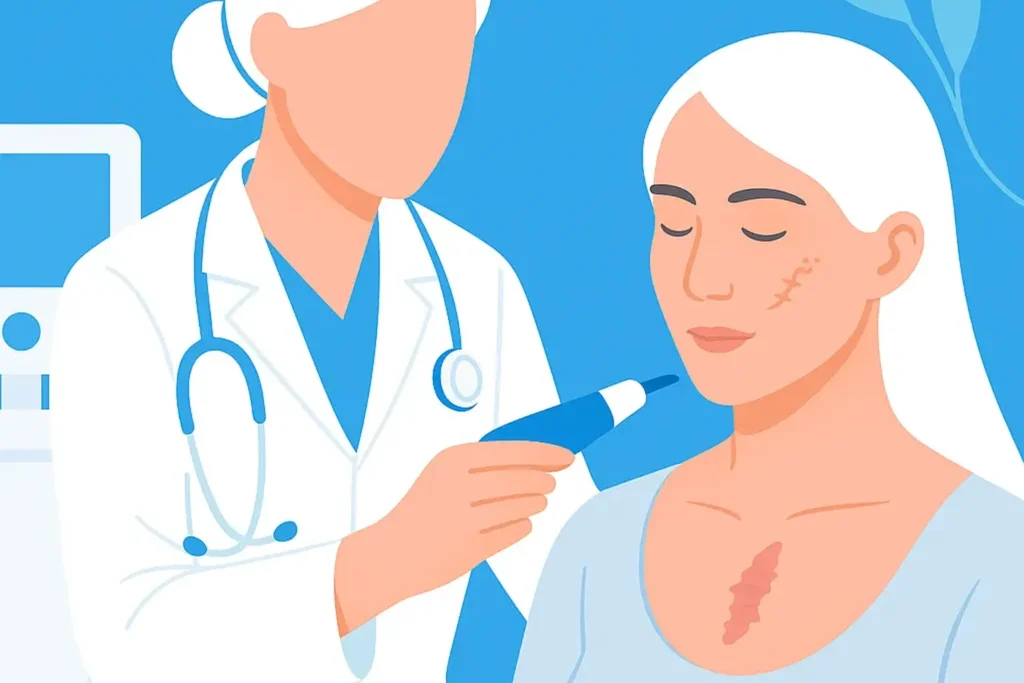
Chest Keloids and Heart Surgery
The chest is one of the most common locations for keloid formation. In a clinical study of 58 patients with chest keloids, around one in five cases (20.7%) were caused by cardiothoracic surgery, including open-heart surgery.
This shows that keloid formation on the chest after heart surgery is not rare and that wound healing in this area needs to be followed closely.
On top of this, the chest skin is constantly being stretched by breathing, coughing and everyday movements like getting out of bed. Studies suggest that as “stretching tension” in the skin increases, the risk of keloid formation also rises, which is why areas like the chest and shoulders are considered high-risk zones for keloids.
In some patients, the chest skin may already be sensitive due to previous acne, burns or infections, which can further increase the likelihood of keloid formation after surgery.
Why Do They Happen After Heart Surgery?
– High Tension Area: The chest is a high-tension area, which can increase the chance of keloid formation.
– Skin Type: People with darker skin tones are more likely to develop keloids.
– Surgery Type: Procedures like open heart surgery, specifically sternotomy (cutting through the breastbone), can trigger keloid growth.
Common Symptoms
Patients often seek keloid on chest removal to alleviate these persistent symptoms:
-
Raised, thickened scar tissue
-
Itchiness or discomfort
-
Red or darkened appearance
Treatment Options
1. Silicone Gel Sheets
– Can help flatten the scar and reduce itchiness.
– Requires consistent use over several months.
2. Steroid Injections
– Steroids can reduce scar thickness and irritation.
– Often used after surgical removal to prevent the keloid from coming back.
Managing Itchiness and Discomfort
– Moisturizers: Keeping the scar hydrated may help with itching.
– Cold Compress: Applying this can soothe the area temporarily.
– Consult Your Doctor: They may recommend specific creams or treatments.
Why Combination Therapy Matters
Scientific data show that single approaches to keloid on chest removal (such as surgery alone) often have high recurrence rates. For keloids in general, excision by itself can lead to recurrence rates reported as high as 80–100%.
Because of this, modern management is usually based on “combination therapy”, for example:
* surgery,
* intraoperative and postoperative steroid injections, and
* supportive measures like silicone products and other adjuvant treatments.
For effective keloid on chest removal following heart surgery, modern clinical protocols often include:
* Careful surgical removal (excision) of the keloid,
* Intraoperative steroid injection directly into the keloid bed, and
* Repeated intralesional steroid injections at set intervals after surgery.
In a series of 58 patients with chest keloids treated using this approach, most patients reported satisfaction with the outcome and improvement in appearance, despite minor complications or mild symptoms such as itch, pain or tenderness.
While a completely scar-free result is rarely realistic, reductions in volume, softening of the tissue and relief of itch or pain are achievable and meaningful treatment goals.
Is Radiotherapy Safe for Keloid on Chest Removal?
Some centers use radiotherapy in keloid treatment, but for chest keloids it is not always the first choice:
* Radiotherapy in the chest area carries a theoretical risk of radiation-related cancers such as thyroid or breast cancer. For this reason, it is reserved for carefully selected cases where the expected benefit outweighs the potential long-term risk.
* Age, sex, overall risk profile and the availability of other treatment options all need to be considered before choosing radiotherapy.
Pressure therapy, which uses special pressure devices, is easier to apply to areas like the earlobe. For the chest, however:
* Designing a well-fitting pressure device is technically more difficult,
* Long-term, continuous use can be uncomfortable, and
* In practice, its use on the chest is limited.
By contrast, silicone gel or sheets are relatively comfortable, non-invasive options, but they still require months of regular use; patient adherence is crucial for success.
Table of Contents
References
Park T.H., Seo S.W., Kim J.K., Chang C.H. (2011). Management of chest keloids. Journal of Cardiothoracic Surgery, 6, 49. doi:10.1186/1749-8090-6-49.
Patel R., Papaspyros S.C., Javangula K.C., Nair U. (2010). Presentation and management of keloid scarring following median sternotomy: a case study. Journal of Cardiothoracic Surgery, 5, 122. doi:10.1186/1749-8090-5-122.