Silicone Scar Treatment for Keloids: An Evidence-Based Approach
Silicone scar treatment for keloids offers a non-invasive approach to flatten and soften raised and often darkened scar tissue, which can be a persistent challenge for both patients and clinicians. Among the vast array of treatments available, silicone scar therapy is emerging as a favored option because of its ease of use and scientifically supported results. This article delves into the evidence supporting the use of silicone, its types, effectiveness, and application guidelines.
By maintaining consistent application over several months, patients often see gradual improvements in texture and color. Consequently, silicone scar treatment for keloids has become a valuable addition to comprehensive management strategies. In addition, it’s important to recognize that results may vary between individuals, and combining silicone therapy with other medical treatments like steroid injections or pressure therapy can enhance outcomes. Consulting a dermatologist can help tailor a treatment plan that maximizes the benefits of silicone-based products while minimizing potential irritation.


Why a Combination Approach Works Best for Keloid Removal?
According to Ogawa et al. (2021), the Nippon Medical School (NMS) Protocol advocates a multimodal approach that combines surgical excision, postoperative radiation, and corticosteroid tape or plaster, a strategy that has been shown to reduce recurrence rates to below 10%. This protocol exemplifies the integration of physical (surgery and radiation) and pharmacologic (steroid) modalities in keloid management.
Similarly, Tripathi (2021) emphasizes that effective treatment often requires cryosurgery, laser therapy, or radiation, supported by pharmacological agents such as verapamil, 5-fluorouracil (5-FU), and corticosteroids to modulate fibroblast activity and collagen synthesis. Collectively, these findings confirm that the integration of physical methods—including excision, laser, cryotherapy, and radiation—with pharmacological therapies and supportive silicone scar treatment for keloids forms the evidence-based foundation of modern multimodal keloid management, a principle also reinforced by Ekstein et al. (2021) .
Silicone Scar Sheets for Keloids
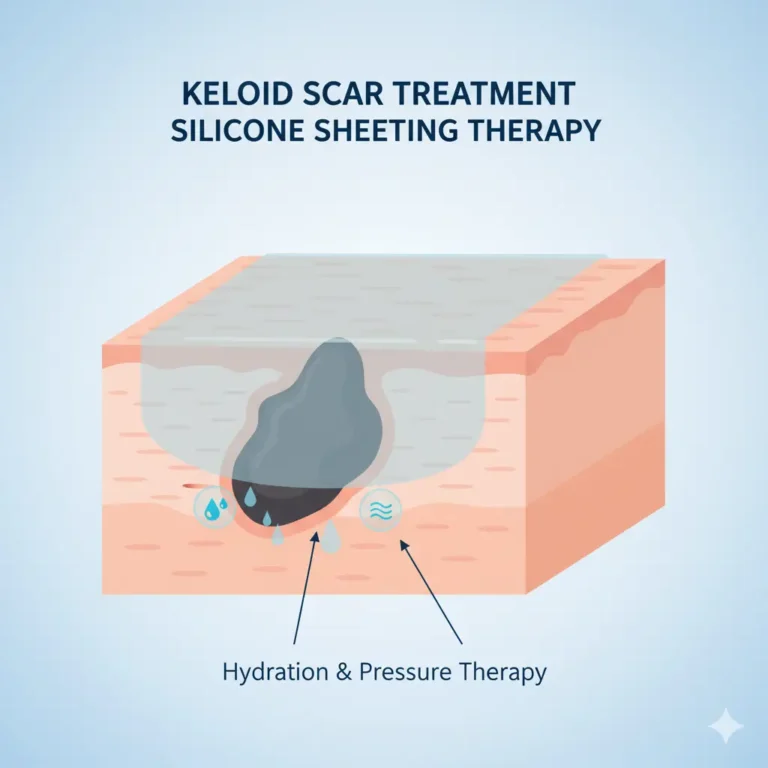
Silicone scar sheets are thin, reusable coverings that apply gentle pressure and occlusion to the keloid. The efficacy of these sheets lies in their ability to hydrate the scar tissue, reduce collagen production, and ease symptoms like itchiness and discomfort.
How Silicone Scar Sheets Work on Keloids
Silicone sheets can significantly improve keloid appearance and texture when used consistently over time. The occlusive nature of silicone alters the microclimate of the scar tissue, which in turn speeds up the remodeling process.
Application Guidelines: How Long to Wear Silicone Sheets for Keloids
To achieve optimal results, silicone sheets should be worn for at least 12 to 24 hours daily. Most studies recommend a treatment period ranging from 8 to 12 weeks, although some cases may benefit from prolonged use.
Silicone Gel for Keloids
Silicone gels offer a transparent, flexible alternative to sheets, particularly suitable for facial keloids or hard-to-reach areas. They provide similar benefits and can be used in conjunction with other treatments, such as [pressure therapy for ear keloids](/pressure-therapy/).
Evaluating the Effectiveness: Do Silicone Scar Sheets Work on Keloids?
Several clinical studies confirm the benefits of silicone treatments. Patients notice reduced itching, flattening of the scar, and an overall improved aesthetic appearance. Despite these positive outcomes, individual responses can vary. Therefore, it is recommended to consult with a dermatologist to tailor treatment plans for maximal benefit.
Selecting the Best Silicone Scar Sheets for Keloids
With numerous products available, selecting the most effective silicone scar sheet can be daunting. Look for products that are FDA-approved and have positive patient testimonials. Sheets should also be durable, easy to clean, and hypoallergenic.
Table of Contents
References