Keloid vs hypertrophic scar treatment: Understanding the Differences
Scarring is a natural part of the healing process, but not all scars are created equal. Two common types of abnormal scars are hypertrophic scars and keloid scars. Understanding the difference between hypertrophic scar and keloid scar is essential for effective treatment and management. This article delves into their characteristics, causes, and treatment options, providing an evidence-based perspective for patients seeking keloid care.


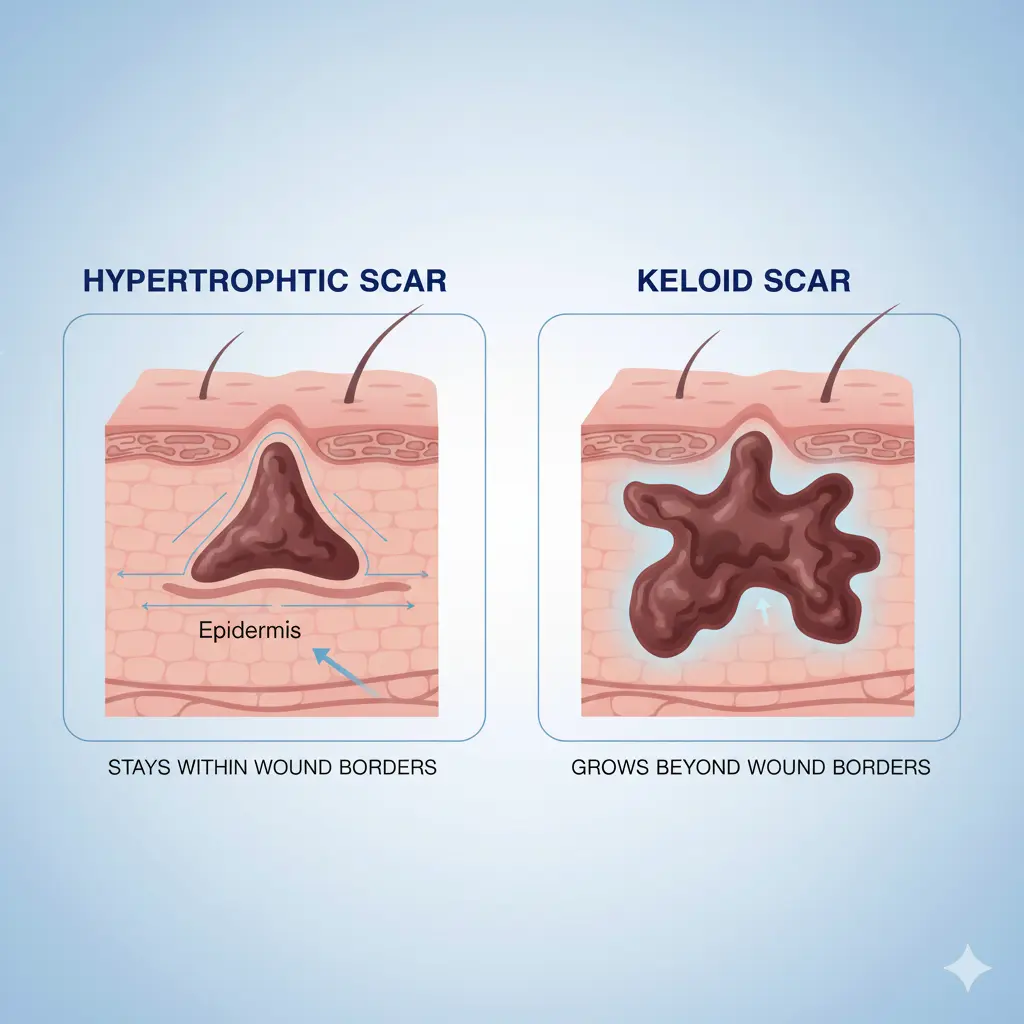
What is a Hypertrophic Scar?
A hypertrophic scar is a raised, red scar that remains within the boundaries of the original wound. These scars are often the result of surgical incisions, burns, or other skin injuries.
Hypertrophic scars typically appear red or pink and may become more noticeable during the initial months following injury. Over time, these scars often flatten and fade without intervention, although they may remain slightly raised compared to the surrounding skin.
Do Hypertrophic Scars Go Away?
Unlike keloids, hypertrophic scars may improve significantly over time. Many hypertrophic scars flatten and become less noticeable within one to two years. However, treatments such as silicone sheets and pressure therapy can accelerate this process and improve cosmetic appearance.
What is a Keloid Scar?
Keloid scars are more aggressive than hypertrophic scars and can extend beyond the original wound site. They are characterized by a thick, raised appearance and can continue to grow over time. Keloids often develop after minor skin injuries, such as piercings or acne, and can be itchy or painful.
Keloid vs Hypertrophic Scar Treatment: Why Diagnosis Matters
Accurate diagnosis is crucial before starting any therapy, as the approach to keloid vs hypertrophic scar treatment varies significantly based on the scar’s behavior. While both types are raised and can appear similar, there are distinct differences in their progression and management:
Growth Pattern: Hypertrophic scars remain confined to the original wound area and may flatten or regress over time without continued growth,. In contrast, keloids extend beyond the wound boundary, can grow indefinitely, and often cause restricted movement.
-
Recurrence Risk: One key difference is the tendency for recurrence. Keloids have a high recurrence rate, making management challenging, whereas hypertrophic scars are less likely to return once treated.
-
Tailored Protocols: Effective management requires a tailored approach. For example, pressure therapy is particularly effective for managing ear keloids and reducing recurrence. Meanwhile, larger or resistant keloids often require aggressive “combination therapy”—such as surgical excision paired with radiation or corticosteroids—whereas hypertrophic scars may respond well to simpler measures like silicone sheets alone,.
Because of these differences, distinguishing between the two is essential to avoid inappropriate treatment and ensure the best clinical outcome
Keloid vs Hypertrophic Scar Recurrence
One key difference is the tendency for keloids to recur after treatment. Keloids have a high recurrence rate, making management challenging. On the other hand, hypertrophic scars are less likely to return once treated. Treatments such as pressure therapy, particularly effective for ear keloids, can help manage and reduce the recurrence of keloids.
Hypertrophic Scar vs Keloid Symptoms
While both types of scars are raised and can appear similar, there are distinct differences in their symptoms and behaviors:
– Hypertrophic Scars: Confined to the wound area, may flatten over time, and typically improve without continued growth.
– Keloid Scars: Extend beyond the wound boundary, can grow indefinitely, and often cause discomfort or restricted movement.
Effective Management and Treatment
Effective management requires a tailored approach, as the optimal keloid vs hypertrophic scar treatment depends heavily on correctly identifying the scar type. Since keloids have a higher risk of recurrence compared to hypertrophic scars, the chosen keloid vs hypertrophic scar treatment plan often involves combination therapies for the best results. Common treatments include:
– Silicone Gel or Sheets: Used to flatten and soften scars.
– Corticosteroid Injections: Help reduce inflammation and size.
– Laser Therapy: Targets scar tissue to improve appearance.
– Surgical Removal: Often combined with other treatments to prevent recurrence.
Table of Contents
References