Cryotherapy for Keloid Treatment: An Evidence-Based Approach
Cryotherapy for keloid scars involves the application of extreme cold to destroy the keloid tissue. This can be accomplished using various techniques, including intralesional cryotherapy where the cold agent is applied directly into the keloid tissue.


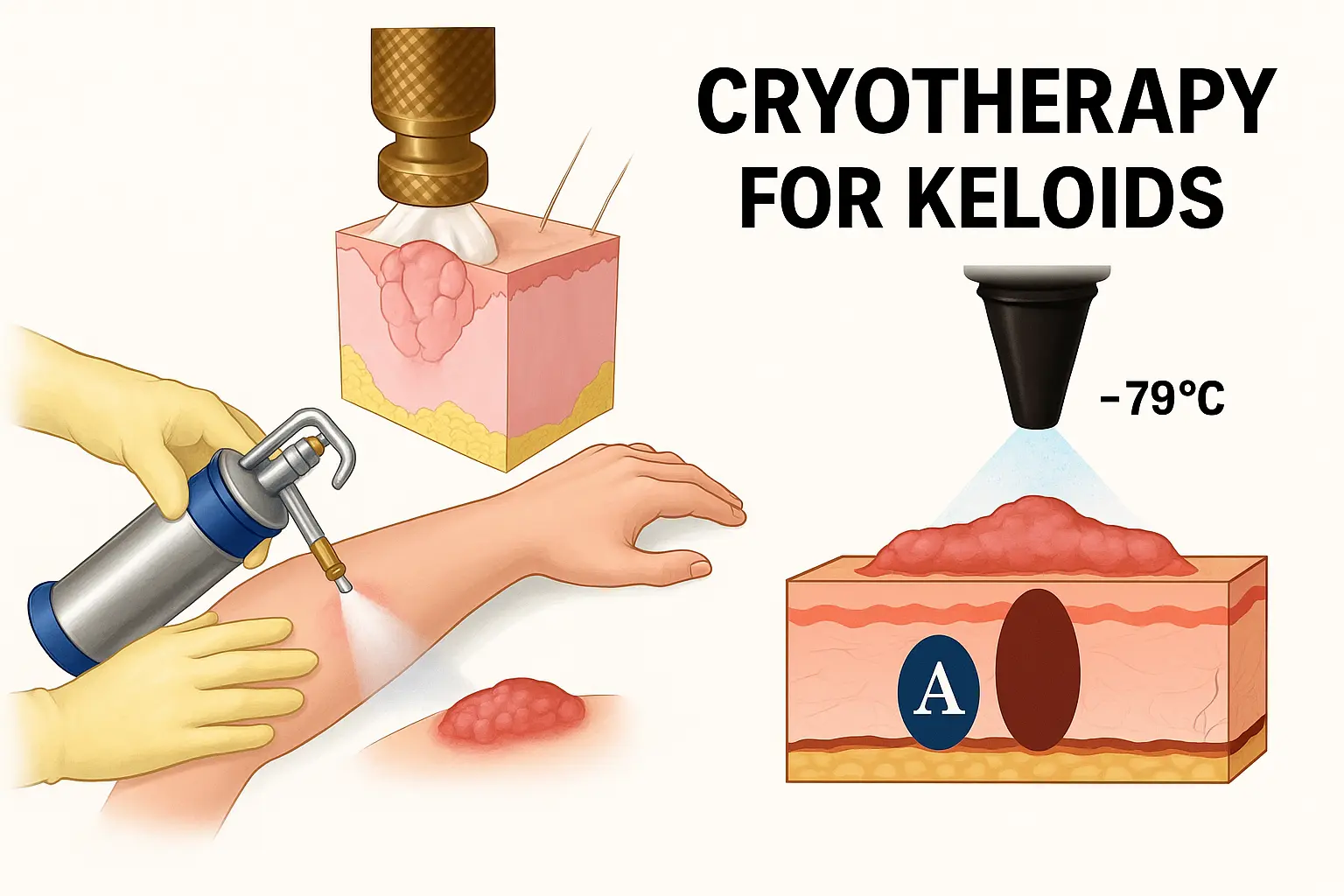
The Keloid Cryotherapy Procedure
The keloid cryotherapy procedure typically involves using liquid nitrogen to freeze the keloid tissue. The cold temperature causes the blood vessels to constrict and the abnormal scar tissue to die, which is then absorbed by the body over time. This procedure can be performed in an outpatient setting and usually takes only a few minutes.
Steps Involved in the Procedure:
1. Evaluation: The healthcare provider evaluates the keloid to determine if cryotherapy is suitable.
2. Preparation: The area is cleaned and a local anesthetic may be applied to minimize discomfort.
3. Application: Liquid nitrogen is applied, often using a cryoprobe, directly to the keloid.
4. Observation: The treated area is monitored for immediate reactions.
How Effective is Cryotherapy for Keloid Scars?
Cryotherapy has shown promising results in reducing both the size and symptoms of keloid scars. According to Walsh et al. (2023), cryotherapy can significantly improve the texture, color, and pliability of keloids, particularly when used in combination with other treatments such as intralesional corticosteroid injections.
Ekstein et al. (2021) also report that liquid nitrogen–based cryotherapy can induce localized necrosis of abnormal fibroblasts, leading to scar softening and flattening over time. However, multiple treatment sessions are often required, and transient hypopigmentation is a common side effect.
In the Nippon Medical School protocol described by Ogawa et al. (2021), cryotherapy is recommended as an adjunct therapy—especially for small, recent keloids or residual lesions after surgical excision—to help suppress recurrence. The literature consistently notes that newer and smaller keloids tend to respond better, while long-standing or large lesions may require combined approaches such as cryotherapy plus TAC or 5-FU injections for optimal outcomes.
Overall, cryotherapy remains a minimally invasive and cost-effective option that offers visible improvement in keloid appearance and symptoms when properly integrated into a multimodal treatment plan.
Benefits of Cryotherapy
– Minimal Downtime: Patients can usually resume normal activities shortly after the procedure.
– Non-Invasive: Unlike surgical options, there’s no need for cutting or stitching.
– Reduced Recurrence: Some studies suggest a lower recurrence rate compared to traditional treatments.
For more severe cases, combining cryotherapy with other treatments like laser treatment for keloids, surgical excision of keloids or steroid injections may be recommended.
Cryotherapy for Keloids Side Effects
While cryotherapy for keloid scars is generally safe, there are potential side effects to consider:
– Pain and Discomfort: Patients may experience pain after cryotherapy for keloid treatment, though this is typically short-lived.
– Blistering: The treated area may develop blisters as the skin heals.
– Hypopigmentation: There is a risk of lighter skin patches forming at the treatment site.
Patients should discuss these risks with their healthcare provider to weigh the benefits and potential drawbacks of the procedure.
Managing Pain After Cryotherapy for Keloid Scars
Pain management is a crucial aspect following cryotherapy. Over-the-counter pain relievers can help alleviate discomfort.
According to Ekstein et al. (2021), transient discomfort and erythema are common and can be managed effectively with over-the-counter analgesics such as acetaminophen or ibuprofen. Ogawa et al. (2021) recommend gentle cold-compress application immediately after the procedure to minimize inflammation and local edema.
Keeping the area clean, moisturized, and protected from friction supports faster re-epithelialization and helps prevent secondary infection. Patients should also avoid excessive sun exposure to reduce the risk of post-inflammatory hypopigmentation.
Overall, with proper aftercare, post-cryotherapy discomfort is short-lived and does not interfere with healing or treatment outcomes.
Conclusion
Intralesional cryotherapy for keloid scars represents a viable option for those seeking non-invasive treatment for keloids. Its effectiveness in reducing scar size and symptoms, combined with minimal recovery time, makes it appealing for many patients. However, it is essential to consult with a healthcare professional to determine if this treatment aligns with your specific needs and to discuss potential side effects.
If you’re considering cryotherapy for keloid treatment, it’s advisable to book a consultation today to explore your options and create a personalized treatment plan.
Table of Contents
References
– Walsh L.A. et al. (2023). Keloid treatments: an evidence-based systematic review of recent advances. *Systematic Reviews*. DOI: 10.1186/s13643-023-02192-7.
– Ekstein S.F. et al. (2021). A Review of Therapeutic Management of Keloids and Hypertrophic Scars. *Journal of Cutaneous and Aesthetic Surgery*.
-Ogawa R., Dohi T., Tosa M., Aoki M., Akaishi S. (2021). The Latest Strategy for Keloid and Hypertrophic Scar Prevention and Treatment (NMS Protocol). Journal of Nippon Medical School, 88: 2–9. DOI: 10.1272/jnms.JNMS.2021_88-106